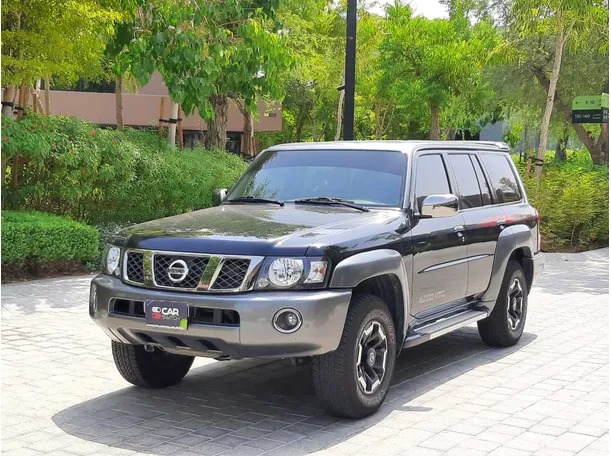
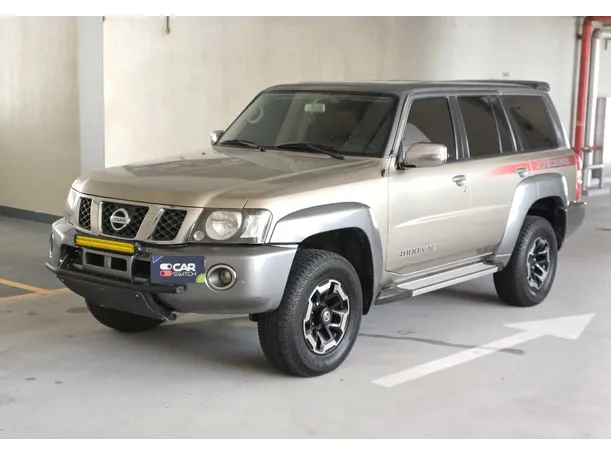
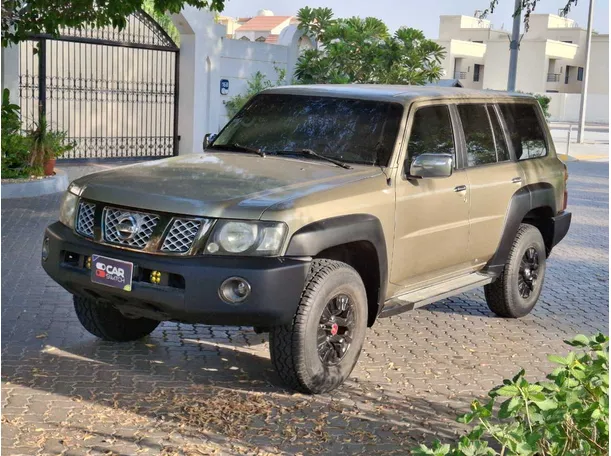
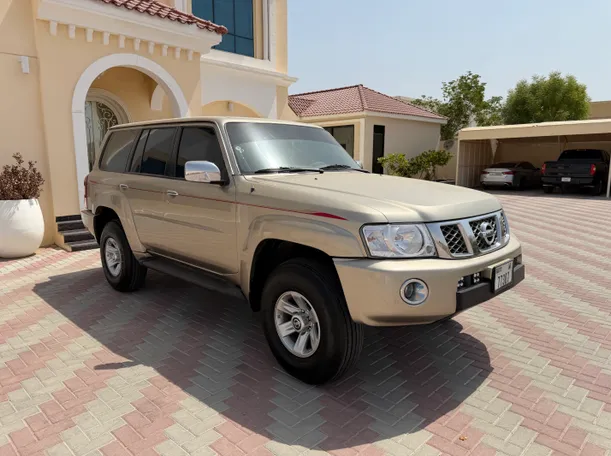
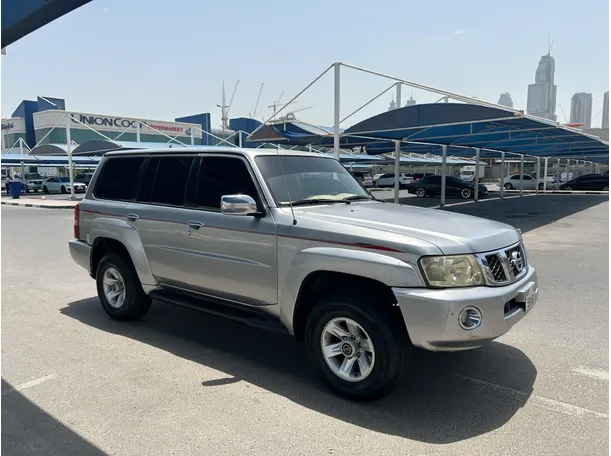
One Patrol never went modern, and that is this one. The Safari is the Y61 — leaf-sprung at the back, live axles at both ends, 4.8 litres of naturally aspirated six under a flat bonnet — and it survives in the UAE because nothing built since does the dune-driving job as simply or as repairably. Nine versions are listed, split between hard-top and wagon bodies.
How much does the Nissan Patrol Safari cost in the UAE?
Body style splits this range before trim does. AED 162,500 starts it with the M/T Hard Top, the short hard-top, and AED 208,000 reaches the Super Safari A/T + Winch at the top of the wagon list. Between them sit manual and automatic versions of each body, and the Super Safari name marks the more heavily equipped cars rather than a different mechanical package.
Which Patrol Safari is the one to buy?
Choose the body first. The hard-top is shorter, lighter and the better tool for serious dune work; the 7-seat wagon is the one that also works as a family car. Manual gearboxes remain popular here for a reason — they give better control on soft sand and are cheaper to live with — while the automatic is easier for everyone else to drive.
Patrol Safari or the modern Patrol?
The Safari is the one to buy if the car will be driven off tarmac regularly. It is lighter, simpler, easier to recover and far cheaper to repair after a hard weekend, and every workshop in the country understands it. The Nissan Patrol is the vastly more comfortable and better-equipped road car; the Patrol Pickup is the same underpinnings with a load bed.
Does the Patrol Safari hold its value, and what should you watch for as it ages?
Better than the class, at about 63% of its value after five years against roughly 60% for large Japanese SUVs here — demand for a proper sand car does not soften. The Safaris CarSwitch inspects arrive at a median of around 85,000 km. What matters on this vehicle is the chassis and the underside: recovery damage, bent steering components and tired leaf springs are the pattern in cars used as intended, and they are what the inspection report is there to find.
Establish how hard the car has been driven before you talk price — start with the used Patrol Safaris listed now.


 Hi Guest